

Anyone who has undergone a traditional PET/CT scan or watched a family member go through one probably remembers the machine. The patient lies on a narrow table that moves into a large scanner, often in a cold hospital or imaging center room. The equipment itself can weigh thousands of pounds, cost millions of dollars, and require specialized space and infrastructure.
Grey Matters Health Inc. (GREY:CSE; AGNPF:OTCQB; AGW2:XFRA) believes that when doctors only need to image the brain, much of that may be unnecessary.
At its first NovaScan Neuroimaging clinic in Davie, Florida, near Fort Lauderdale, patients will instead sit in a chair while a compact PET-only scanner moves into position around their heads.
"The scanner comes to you," Chief Executive Officer Christopher Moreau told Streetwise Reports.
That difference is at the center of the company's plan to make brain PET imaging more comfortable for patients and easier to bring into communities. Moreau said the first NovaScan clinic was expected to begin taking patients shortly. If the model works, he described a goal of at least 100 clinics across the U.S. within two to two-and-a-half years.
"We're marketing to neurologists, geriatricians, psychiatrists," Moreau said. "These are doctors who are ordering these brain PET scans." His pitch to them was considerably simpler: "Send us one patient and see how we do with them. Just send us one patient."
Why Alzheimer's Imaging Has Taken on New Importance
The timing could be important. For years, confirming Alzheimer's disease could give patients and families an answer without necessarily giving physicians many ways to change what came next. New treatments have begun to alter that equation.
Leqembi and Kisunla, two approved antibody treatments, target amyloid plaques in the brain and can slow cognitive decline in eligible patients. Their prescribing information directs treatment to begin in patients with mild cognitive impairment or mild dementia and requires confirmation of amyloid pathology before treatment.
An amyloid PET scan can help provide that confirmation. Patients receive a radioactive tracer that binds to amyloid deposits, allowing the scanner to capture their distribution in the brain. Cerebrospinal fluid (spinal tap) testing can also establish amyloid pathology, but PET imaging is the preferred route through the diagnostic process rather than a universal requirement for every patient.
For Grey Matters, the important change is that physicians now have more reason to identify amyloid while patients may still qualify for treatment. "We know that Alzheimer's is going to be a huge demand that's going to start to go through the system, and we want to help," Moreau said.
Coverage policy has shifted as well. In October 2023, the Centers for Medicare & Medicaid Services removed its restrictive national coverage determination for amyloid PET imaging, including the previous once-per-lifetime limitation under that policy. Coverage decisions moved to Medicare Administrative Contractors, creating a pathway for broader access based on applicable coverage criteria. Both the brain PET scans and the Alzheimer’s treatments are covered by Medicare, Medicaid, and private insurance.
Moreau said existing PET/CT facilities often prioritize abdominal cancer and cardiac imaging, leaving neurological patients competing for appointments. NovaScan's answer is a facility devoted specifically to brain PET imaging.
1Analyst Stewart Thomson also pointed to Grey Matters' Alzheimer's imaging strategy in a March 26 report, highlighting its plans for a U.S. network of dedicated neuroimaging clinics using brain-specific PET technology.
Thomson rated the company a "Strong Speculative Buy" and set short-, medium-, and long-term targets of CA$0.08,
A Smaller Scanner Changes the Equation
The Florida clinic will use the CareMiBrain system developed by Spain's Oncovision. The U.S. FDA-cleared device is a dedicated brain PET scanner that accommodates patients in a seated or reclined position.
Traditional PET/CT systems combine metabolic PET imaging with CT to provide anatomical information, an important combination when physicians are locating cancer and other abnormalities throughout the body. Grey Matters' argument is that a dedicated brain scan does not need the CT component or require the same large, multipurpose equipment.
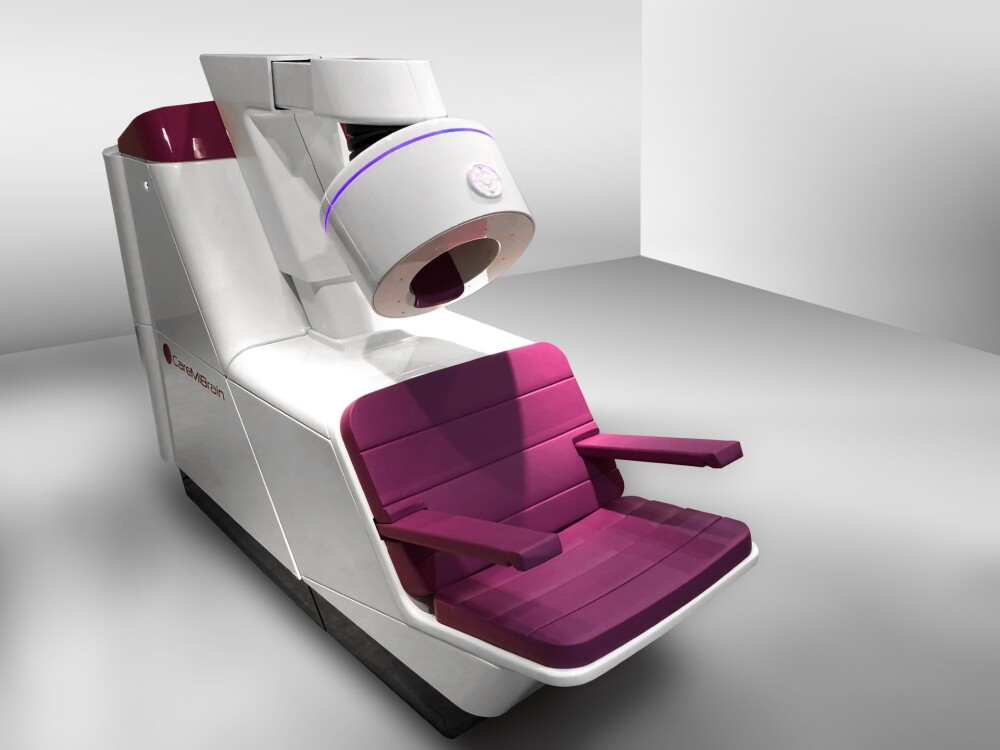 The company's presentation listed the CareMiBrain scanner at approximately 662 pounds and its acquisition cost at approximately US$850,000.
It contrasted that with estimated equipment costs of US$3 million to US$5 million for conventional PET/CT systems, which can weigh thousands of pounds and require significant cooling, electrical, structural, and installation infrastructure.
Those figures are company estimates, but they help explain why management believes the smaller scanner could change the economics of opening imaging centers.
Since CareMiBrain does not incorporate a CT component, Grey Matters stated that this results in 25% less radiation exposure than its PET/CT comparison. Patients still receive a radioactive tracer, so the procedure is not radiation-free, and actual exposure depends on the imaging protocol.
The difference patients notice is more immediate. Rather than lying on a narrow table that moves into a large whole-body scanner, they remain seated while the scanner moves around their head.
For an older patient already dealing with cognitive decline or anxiety about a possible Alzheimer's diagnosis, Moreau believes that experience matters.
"The patient experience is huge," he said.
The compact machine also changes where Grey Matters can put its clinics. Instead of constructing specialized imaging facilities around large equipment, management plans to adapt existing medical offices, which already have reception areas, administrative space, and examination rooms that can be used for patient preparation.
"We are going into space that's already existing," Moreau said. "That's the corporate plan."
His longer-term goal is to make the process efficient enough to open a clinic in approximately 90 days and eventually prepare several locations simultaneously.
Florida Becomes the First Test
The inaugural NovaScan clinic is located at the HCA Florida University Medical Office Building on the campus of HCA Florida University Hospital in Davie. Moreau said Florida's concentration of older residents helped drive the decision to launch there.
The approximately 1,750-foot clinic is designed around two on-site staff members, with image interpretation performed remotely. Moreau described private preparation rooms, comfortable seating, and a quieter setting intended to make the visit easier for patients.
Patients will still need physician referrals. NovaScan is not being positioned as a walk-in brain screening service.
Grey Matters announced an agreement with ProScan Reading Services in August to interpret scans from the Florida clinic. ProScan's subspecialty radiologists will provide readings for amyloid imaging and other specified neurological applications, including standardized Centiloid reporting for Alzheimer's evaluations. Moreau said NovaScan aims to return reports within 24 to 48 hours and provide referring physicians with access to images.
Moreau also identified GE HealthCare as the supplier of the Vizamyl amyloid imaging tracer for the Florida operation. Tracer supply is an important logistical consideration because the radioactive materials used in PET imaging have limited usable lifetimes, meaning future clinics must be located within a practical delivery range.
From One Clinic to a National Network
Moreau said the next step after Davie would be a cluster of three or four Florida clinics. Tampa, Miami, and The Villages were among the potential markets he discussed, although he did not present them as finalized locations.
That first cluster would help Grey Matters determine which responsibilities should remain at individual clinics and which can be centralized before the company attempts a broader rollout. The company intends to pursue corporate expansion rather than a conventional franchise model, with Moreau saying larger financing relationships could eventually support groups of new locations.
The first clinic has already provided lessons. Moreau described a municipal licensing delay after officials initially treated the PET-only facility as a conventional PET/CT installation. Because the newer technology did not fit neatly into the existing category, resolving the issue added time to the opening process. Grey Matters separately announced that it received its Florida radioactive materials license in August.
Moreau acknowledged that opening the doors will not automatically fill the appointment book. Physicians need to learn about NovaScan, become comfortable with the technology and service, and begin referring patients.
"Physicians have to get used to us; they've got to hear about us," he said.
That makes the first patient scan the company's next concrete milestone. It would mark the transition from planning a specialized imaging network to operating its first location and begin answering whether the model can be repeated elsewhere.
 Streetwise Ownership Overview*
Grey Matters Health Inc. (GREY:CSE; AGNPF:OTCQB; AGW0:FRA)
| Strike Price | Number | Expiry Date |
|---|---|---|
| $9.38 | 114,887 | 07/04/27 |
| $10.31 | 4,338 | 07/04/27 |
| $10.31 | 8,192 | 08/22/27 |
| $10.63 | 149,560 | 08/22/27 |
| $0.6 | 1,250,000 | 06/05/29 |
| $0.6 | 1,875,000 | 06/18/29 |
| $0.55 | 692,370 | 09/10/29 |
| $0.6 | 712,500 | 09/10/29 |
| $25 | 450,000 | 05/22/30 |
| $2.5 | 550,000 | 05/22/30 |
| $15 | 517,500 | 06/30/30 |
| $15 | 116,667 | 07/24/30 |
| $1.5 | 126,429 | 11/14/30 |
| $1.5 | 150,000 | 11/28/30 |
| $1.5 | 251,786 | 12/23/30 |
| $1.5 | 83,929 | 12/31/30 |
| Date | Old Symbol | Old Shares | New Symbol | New Shares |
|---|---|---|---|---|
| 04/21/26 | AGN:CSE | 10 | GREY:CSE | 1 |
| 03/29/23 | AGNPD:OTCQB | 0.8378 | AGNPF:OTCQB | 1 |
| 03/03/23 | AGN:CSE | 1 | AGN:CSE | 4 |
| 11/24/21 | AGN:CSE | 100 | AGN:CSE | 1 |
| 11/24/21 | AGNPF:OTCQB | 100 | AGNPD:OTCQB | 1 |
| 12/30/19 | BTHCF:OTCQB | 1 | AGNPF:OTCQB | 1 |
| 02/19/19 | BTH:CSE | 1 | AGN:CSE | 1 |
| 10/17/18 | BTH:CSE | 2 | BTH:CSE | 1 |
Grey Matters is not trying to introduce physicians to an entirely new medical test. PET imaging is already established, physicians already order it, and new Alzheimer's treatments have increased the importance of identifying amyloid pathology in eligible patients.
The company's bet is that when physicians only need to see the brain, patients may not need the experience, infrastructure, and massive equipment that come with imaging nearly everything else.
Ownership and Share Structure2
Management and insiders own about 11% of the company, and about 21% is owned by institutions. The rest is with retail.
Grey Matters has 10.31 million outstanding shares, a market cap of approximately CA$4.28 million, and a 52-week range of CA$0.335 to CA$0.90
Key Investor Takeaways
-
Grey Matters is targeting an emerging Alzheimer's imaging opportunity. New treatments, including Leqembi and Kisunla, require confirmation of amyloid pathology before treatment, potentially increasing demand for brain PET imaging.
-
The NovaScan model is designed around substantially smaller infrastructure. Grey Matters said its approximately 662-pound CareMiBrain scanner costs about US$850,000, compared with its estimate of US$3 million to US$5 million for conventional PET/CT equipment.
-
Management sees the smaller footprint as key to scaling. The company plans to use existing medical-office space and ultimately aims to open new clinics in approximately 90 days, with a stated goal of at least 100 locations within two to two-and-a-half years.
-
The Davie clinic is the proof-of-concept. Management has acknowledged that physician adoption and patient volume remain to be demonstrated, making the first patient scan and subsequent referral activity important milestones.
-
The model still faces execution risk. Expansion depends on physician referrals, financing, regulatory approvals, tracer availability, suitable locations, and Grey Matters' ability to reproduce the economics of its first clinic.
Frequently Asked Questions
What is a brain PET scan?
A brain PET scan uses a radioactive tracer and specialized imaging equipment to show activity or specific biological targets in the brain. In Alzheimer's evaluations, certain PET tracers can be used to detect amyloid plaque.
How is an amyloid PET scan used to diagnose Alzheimer's disease?
An amyloid PET scan can help determine whether amyloid plaque is present in the brain. Confirmation of amyloid pathology is required before eligible patients begin certain Alzheimer's treatments, including Leqembi and Kisunla.
What is the difference between a brain PET scanner and a PET/CT scanner?
Traditional PET/CT combines PET imaging with CT and can be used throughout the body. The CareMiBrain system used by NovaScan is dedicated specifically to brain PET imaging and does not include a CT component.
Does a brain PET scan expose patients to radiation?
Yes. PET imaging requires a radioactive tracer. Grey Matters stated that its CareMiBrain system results in 25% less radiation exposure than its PET/CT comparison because it does not include the additional CT component. Actual radiation exposure depends on the imaging protocol.
Why could the demand for Alzheimer's brain imaging increase?
New Alzheimer's treatments such as Leqembi and Kisunla require confirmation of amyloid pathology before treatment begins. Grey Matters believes the availability of these therapies, along with changes to Medicare coverage policy for amyloid PET imaging, could increase demand for specialized brain imaging.
| Want to be the first to know about interesting Medical Devices and Life Sciences Tools & Diagnostics investment ideas? Sign up to receive the FREE Streetwise Reports' newsletter. | Subscribe |
Important Disclosures:
- Grey Matters Health is a billboard sponsor of Streetwise Reports. The company pays a monthly sponsorship fee of US$3,000–US$6,000 for banner advertising and an enhanced company profile page. Streetwise Reports’ editorial content is fully independent and is not influenced by sponsorship.
- As of the date of this article, officers, contractors, shareholders, and/or employees of Streetwise Reports LLC (including members of their household) own securities of Grey Matters Health.
- James Guttman wrote this article for Streetwise Reports LLC and provides services to Streetwise Reports as an employee.
- This article does not constitute investment advice and is not a solicitation for any investment. Streetwise Reports does not render general or specific investment advice and the information on Streetwise Reports should not be considered a recommendation to buy or sell any security. Each reader is encouraged to consult with his or her personal financial adviser and perform their own comprehensive investment research. By opening this page, each reader accepts and agrees to Streetwise Reports' terms of use and full legal disclaimer. Streetwise Reports does not endorse or recommend the business, products, services or securities of any company.
- This article does not constitute medical advice. Officers, employees and contributors to Streetwise Reports are not licensed medical professionals. Readers should always contact their healthcare professionals for medical advice.
For additional disclosures, please click here.
1. Disclosure for the quote from the Stewart Thomson article published on March 26, 2026
- For the quoted article (published on March 26, 2026), Grey Matters Health has paid Street Smart, an affiliate of Streetwise Reports, US$3,000.
- Author Certification and Compensation: Stewart Thomson was retained and compensated as an independent contractor by Street Smart for writing this article. Mr. Thomson is a retired Canadian financial advisor who has passed the Canadian Securities Course as well as additional technical analysis courses that were mandated by his former employer and approved by Ontario regulatory bodies. For the past 15 years, he has been editing and writing numerous financial newsletters that have a strong focus on charts. The recommendations and opinions expressed in this content reflect the personal, independent, and objective views of the author regarding any and all of the companies discussed. No part of the compensation received by the author was, is, or will be directly or indirectly tied to the specific recommendations or views expressed.
2. Ownership and Share Structure Information
The information listed above was updated on the date this article was published and was compiled from information from the company and various other data providers.